
Stories
Md Julfiker Rahman, Senior Program Manager, SMART Project, PKSF
Agroecological farming is a sustainable approach to agriculture that applies ecological principles to the design and management of food systems. It seeks to produce food in harmony with nature while enhancing farmers’ livelihoods, community resilience, and environmental health. The key feature of agroecology is its holistic perspective; rather than focusing solely on yields, it considers the entire agroecosystem—soil, water, plants, animals, and people. It emphasizes biodiversity, recognizing that diverse crops and landscapes are more resilient to pests, diseases, and climate shocks. Furthermore, it relies on local knowledge and farmer innovation, blending traditional wisdom with scientific understanding to create context-specific solutions.
The SMART project actively promotes agroecological farming among farmers in the high-value crops sub-sector through various sub-projects dedicated to vegetables, fruits, flowers, and medicinal plants. While the core objective of the project is to help farmers adopt climate-resilient RECP practices, many of these interventions align perfectly with agroecological principles. Here is how the SMART project is laying the foundation for agroecological farming:
Building living soil
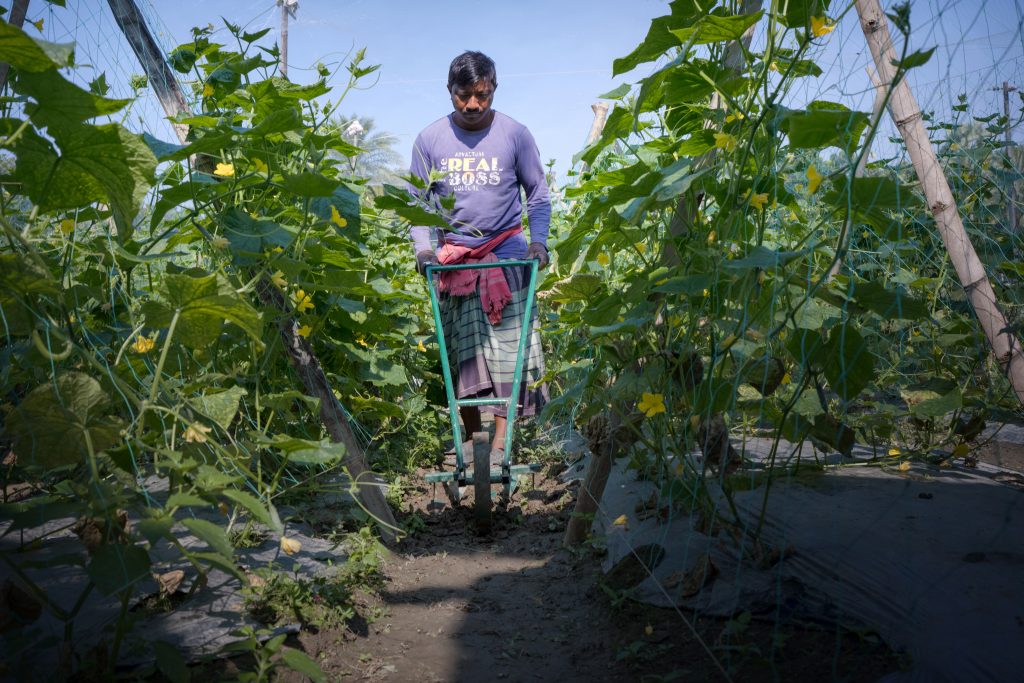
Healthy soil is the bedrock of agroecology. SMART farmers enrich the earth using vermicompost, trichocompost, mulching, and mechanical weeders, alongside composting crop residues to increase organic matter in the soil. By feeding the beneficial microorganisms in the soil, they unlock the natural nutrients plants need to thrive. Cover crops like mung bean and lentil are often interplanted with main crops to naturally balance nitrogen levels, while minimal tillage preserves the delicate soil structure and fungal networks essential for long-term soil health.
Diversity as a strategy
Unlike industrial monocultures, agroecological farms embrace variety. Crop rotation – growing different crops in sequence – breaks pest cycles and balances nutrient demands. For instance, mango growers cultivate mung bean, lentil, mustard, ginger, or turmeric in the same orchard, while pineapple growers intercrop with papaya, ginger, chili, and aram. Vegetable growers often plant cauliflower, cabbage, carrots, and coriander together, ensuring the most efficient use of land and resources.
Natural pest management
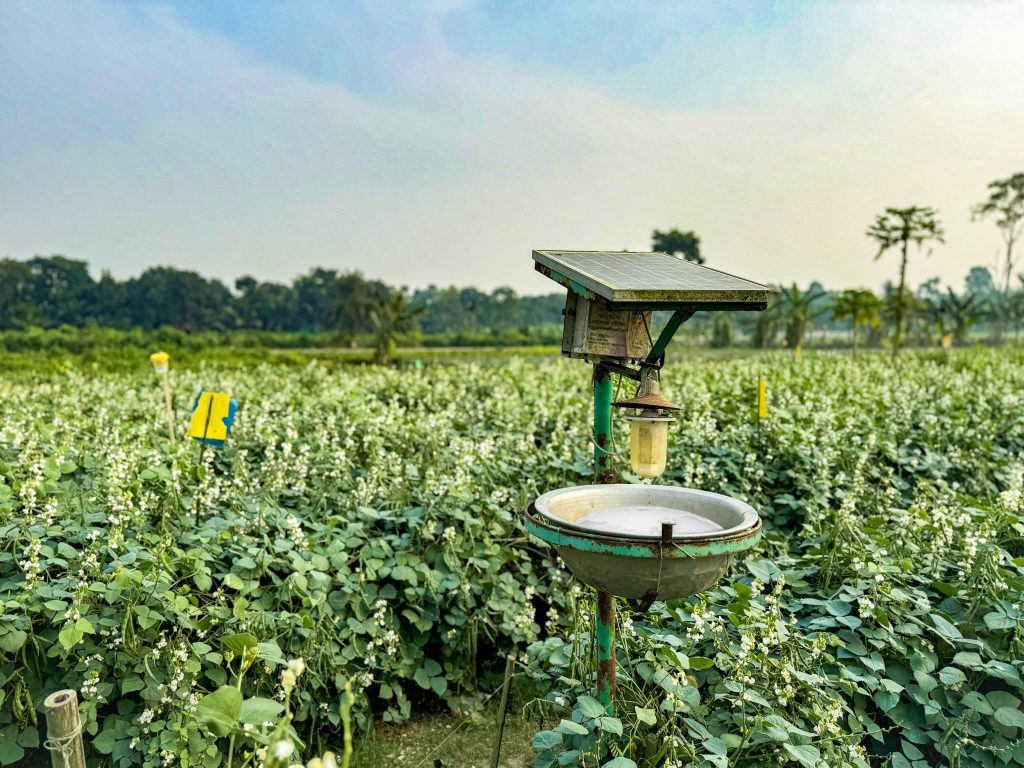
Rather than relying on synthetic pesticides, farmers utilize bio-pesticides and Integrated Pest Management (IPM) systems, such as pheromone, color, and light traps. Some have adopted the “perching” method, installing bamboo poles as resting spots for insectivorous birds that naturally consume harmful insects. In fruit cultivation—specifically for mangoes, bananas, and dragon fruits—farmers use fruit bagging to protect their harvest from pests, ensuring the produce remains safe and healthy for consumption.
Water efficiency
The project introduces modern techniques to ensure every drop of water counts. This includes the use of drip and sprinkler irrigation, foggers in Gerbera flower sheds, and the use of hosepipes for transporting water to minimize the loss typically associated with open canals.
Climate resilience
A key intervention of the SMART project is the promotion of climate-smart and adaptive crop varieties suited to specific geographical regions. For example, the G-9 banana is a dwarf variety particularly resilient to cyclones. In the Barind tract, where water is scarce, the project encourages fruit cultivation over rice crops to conserve the local water table.
Agroecological farming produces nutritious food while healing the land. As climate change challenges conventional industrial agriculture, these time-tested yet innovative practices offer a pathway toward food systems that support both the community and the environment.