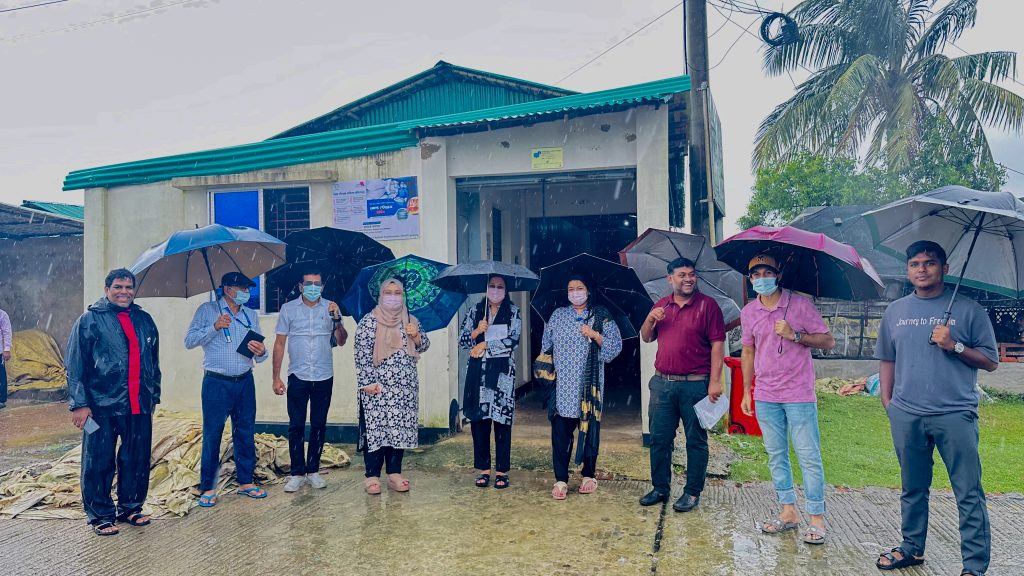

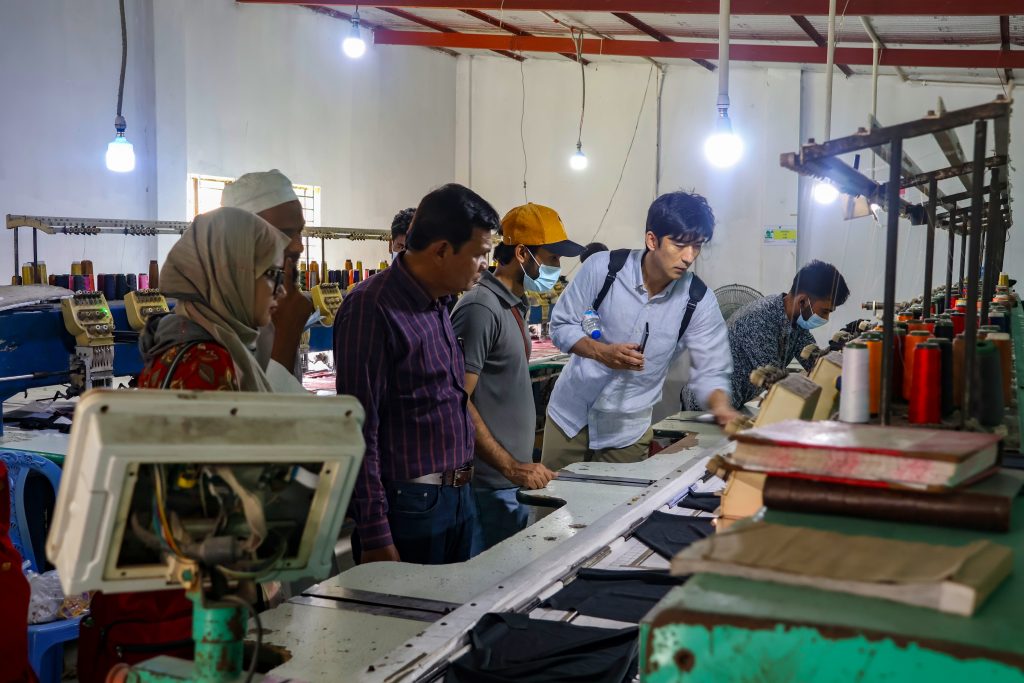
World Bank and PKSF delegation members inspect production activities at a mini-garment factory in Gogannagar, Narayanganj.
News & Events

WB-PKSF delegation reviews Mini-Garments sub-project in Narayanganj

Gogannagar, Narayanganj, on 1 October 2026 to review the implementation progress, achievements and ongoing activities of the ‘Promoting Sustainable Mini-garments through RECP Practices’ sub-project implemented by Palli Mongal Karmosuchi (PMK).

The delegation first visited the PMK Nitaiganj branch office, where a presentation on the progress and implementation of the sub-project was delivered. The team then visited five factories in the Gogannagar mini-garments cluster: Mayer Doya Hosiery, Bhai Bhai Embroidery, SD Hosiery and Garments, Bismillah Hosiery and Bismillah Garments.

The field visit focused on assessing the implementation of project-supported activities and understanding changes in productivity, efficiency, workforce skills, working conditions and workplace safety. The delegation also reviewed the use of modern technologies and production methods in the mini-garments sector, while identifying achievements, challenges and opportunities for further improvement.
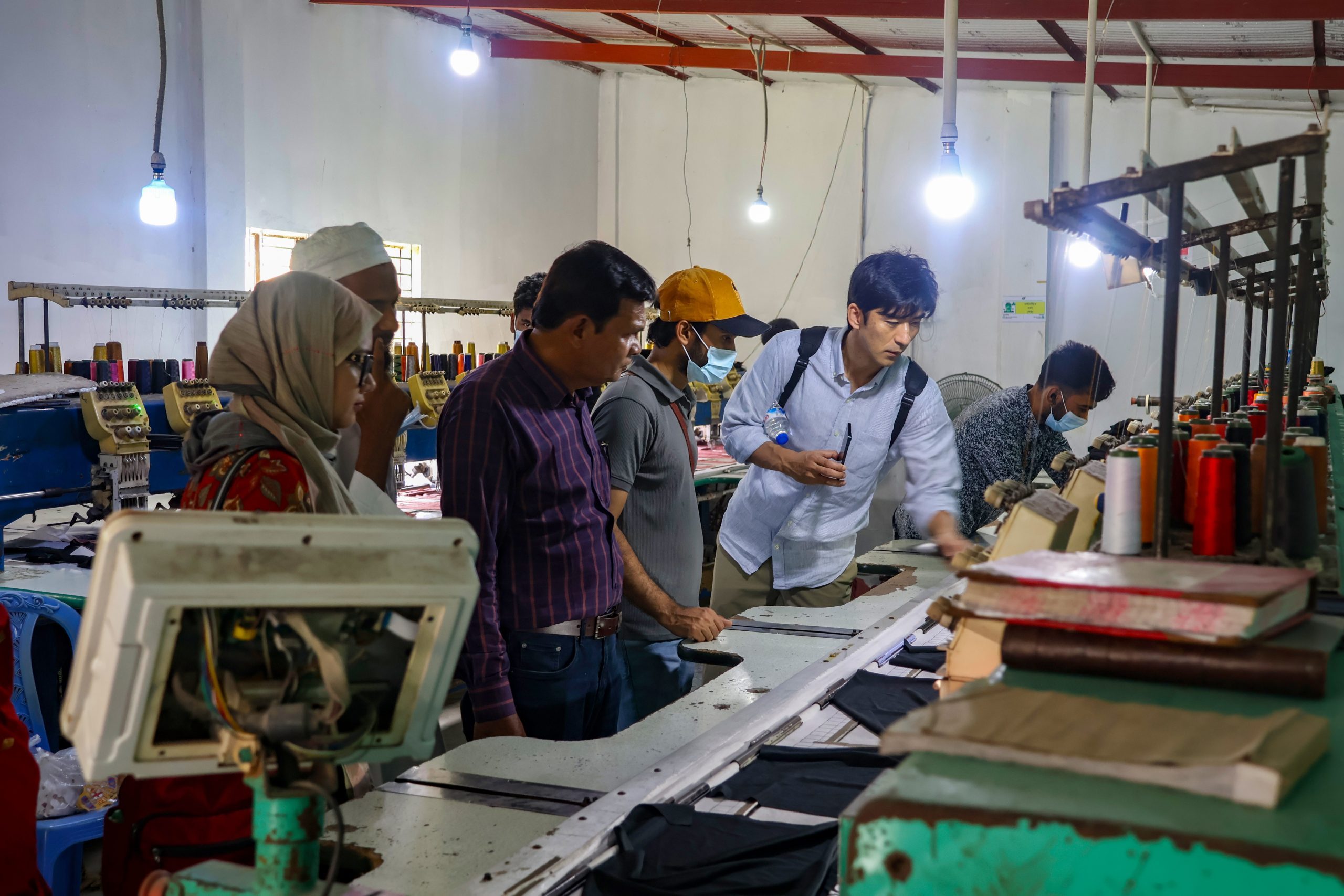
During the factory visits, the delegation observed different sections of the production facilities and the various stages of the manufacturing process. Team members also spoke directly with factory owners, managers and workers to understand how project-supported initiatives were being implemented in practice.

Particular attention was given to production processes, workers’ practices, skills development, the use of modern technologies and equipment, working conditions, occupational health and safety, productivity enhancement, quality control, waste management and the effective use of workers’ skills.

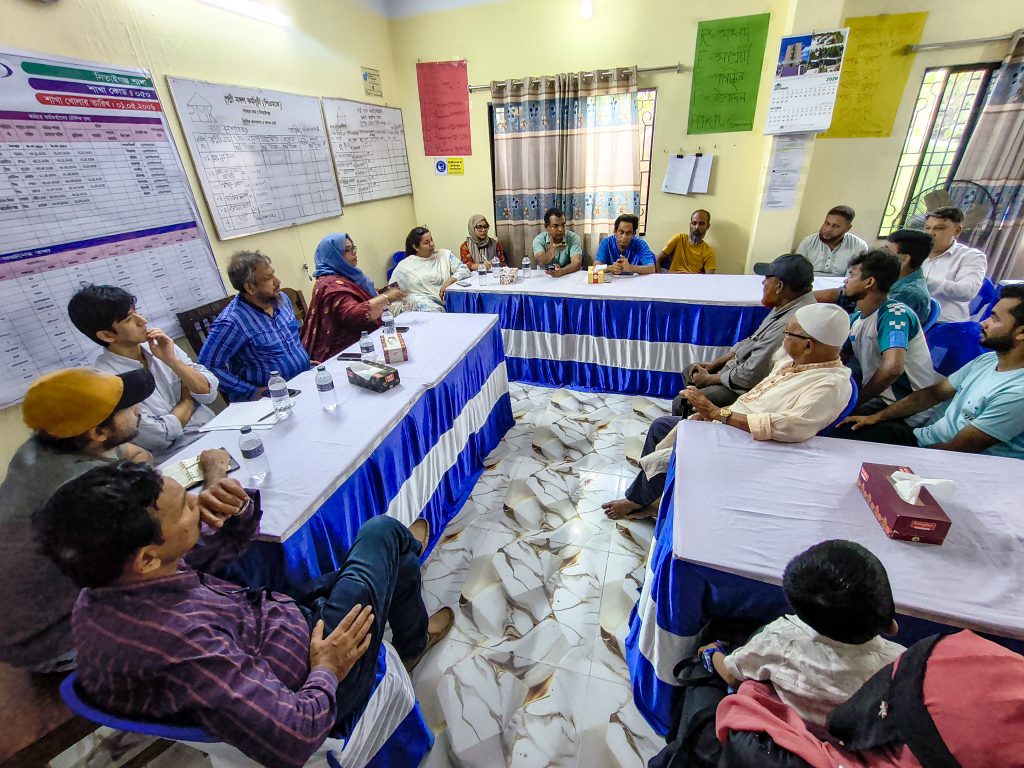
A consultation meeting was subsequently held with factory owners and workers in the presence of senior PMK officials and sub-project personnel. Discussions covered the practical impact of project-supported loan assistance, training and other interventions. Entrepreneurs shared their experiences in applying newly acquired skills and described the positive effects on their production processes, while the delegation sought further information about project implementation and outcomes.

The visit identified several positive developments at the enterprise level. Skills development initiatives were found to be contributing to improved workforce capacity, while improved work practices, skilled personnel and modern technology were creating opportunities to enhance productivity. The use of modern machinery was also observed to support greater efficiency and improved production quality. Attention to the working environment and worker safety, alongside strengthened management capacity, was identified as another positive aspect of the intervention.
World Bank and PKSF delegation members inspect production activities at a mini-garment factory in Gogannagar, Narayanganj.

The delegation and project team also identified areas requiring continued attention to make the interventions more effective and sustainable. These include strengthening regular and needs-based training, expanding the use of modern technologies and production methods, regularly monitoring workplace health and safety, establishing effective productivity improvement plans, assessing the application and outcomes of workers’ training, documenting project achievements, and exploring opportunities to replicate successful initiatives in other suitable factories.

The visit further recommended continued monitoring of project activities, sustained investment in skills development, the introduction of results-based performance indicators, stronger workplace safety measures, greater adoption of modern technologies, systematic documentation of successful interventions, regular collection of beneficiary feedback, and periodic assessment and reporting of project results. The report also emphasized the importance of appropriately implementing recommendations from PKSF and the World Bank.

The field visit concluded with a community consultation involving local entrepreneurs and other stakeholders, providing an opportunity to capture their experiences and views. The visit highlighted the progress being made under the SMART sub-project and the potential for further improvements in sustainable microenterprise development through skills enhancement, modern production technologies, improved productivity and safer working environments.
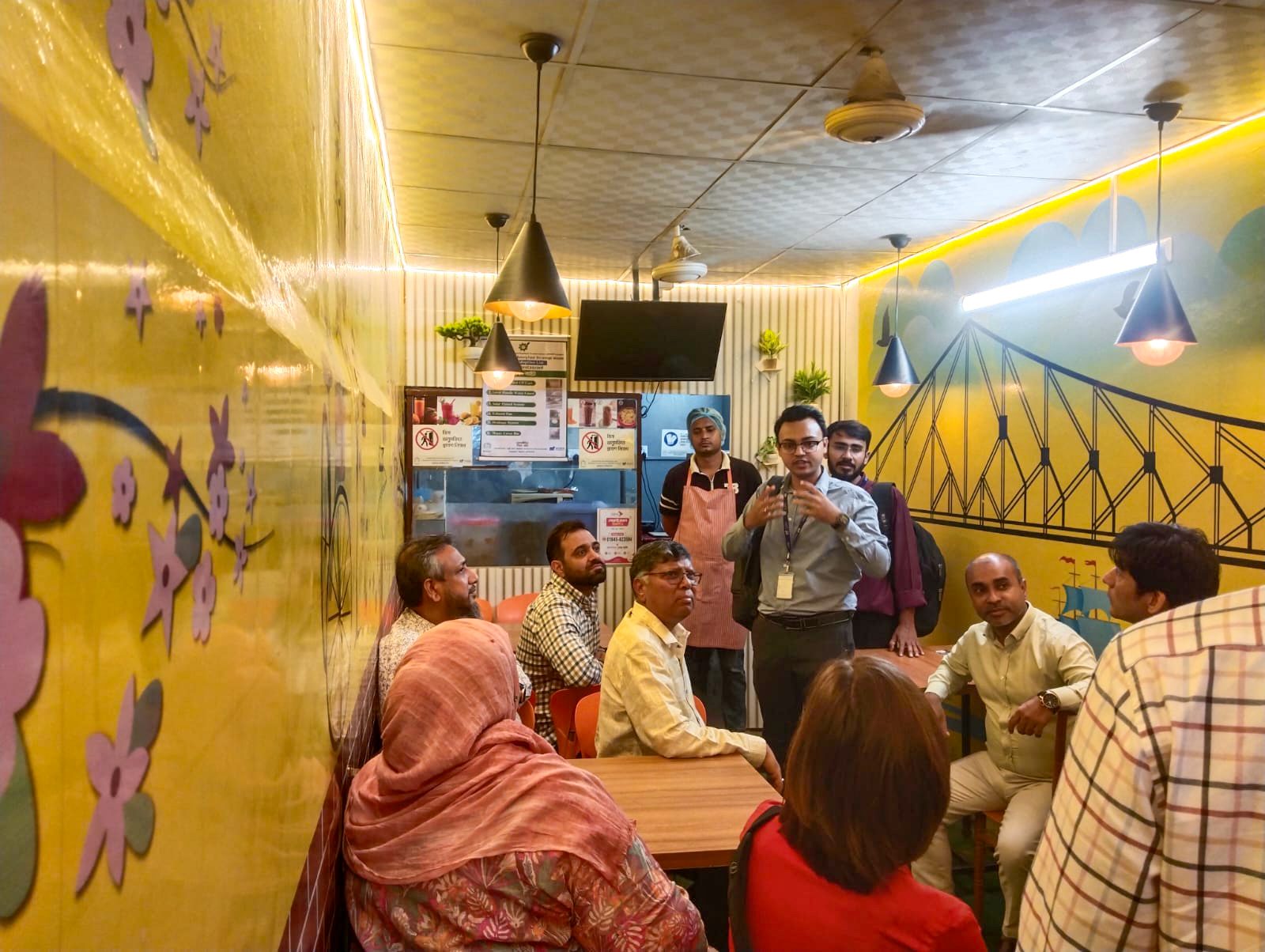
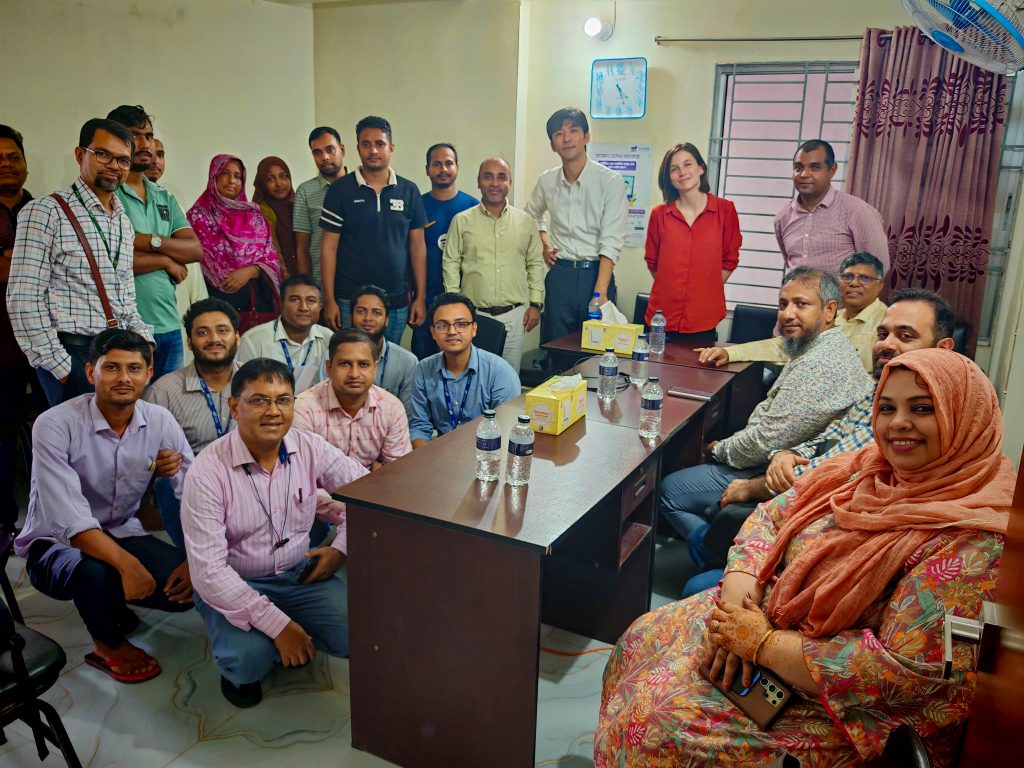
World Bank and PKSF delegation members visit a SMART-supported food business in Badda, Dhaka.
News & Events

WB-PKSF delegation visits street food activities of SMART project in Dhaka

A joint delegation from the World Bank and PKSF visited microenterprises in Badda, Dhaka, supported under the SMART project, on 31 August 2026, to observe the adoption of Resource Efficient and Cleaner Production (RECP) practices in the restaurant, street food and bakery sectors.

Implemented by SAJIDA Foundation under the SMART project, the sub-project helps small food businesses improve resource efficiency, hygiene, food safety and workplace conditions through financing, grants and practical training.

During the visit, the delegation observed a range of RECP measures adopted by participating enterprises, including solar energy, energy-efficient cooking equipment and lighting, improved ventilation, water-saving arrangements, safer waste handling, and enhanced hygiene and occupational safety practices. These measures are designed to reduce the consumption of energy, water and raw materials, lower operating costs, and minimize the environmental footprint of small food businesses.

World Bank, PKSF and SAJIDA Foundation officials discuss RECP practices with an entrepreneur at a SMART-supported food business.

The delegation also interacted with entrepreneurs to learn about their experiences in implementing the practices and the changes these interventions have brought to their day-to-day operations. The discussions highlighted the importance of combining financial support with practical guidance to help small businesses adopt cleaner, safer, and more resource-efficient production methods.

The World Bank delegation comprised Keisuke Iyadomi, Senior Climate Change Specialist; Hosna Ferdous Sumi, Senior Private Sector Specialist, Finance, Competitiveness and Investment; Shariful Islam, Senior Social Development Specialist; Sayed Mujtaba Shobair, Environmental Specialist; and Jasmin Kraehenbuehl, Climate Finance and Carbon Market Analyst.

Representing PKSF were A.K.M. Zahirul Haque, Assistant General Manager, CERD and Project Coordinator of the SMART project; and Abu Hayad Md. Rahat Hossain, Manager, CERD and Deputy Project Coordinator of the SMART project. Md. Fazlul Hoque, Deputy Chief Executive Officer of SAJIDA Foundation, also accompanied the delegation.

The delegation appreciated the visible progress in implementing RECP measures at the enterprise level and identified opportunities to expand technology adoption and extend support to more micro and small food businesses. The visit also underscored the importance of strengthening environmental management, food safety, and occupational health and safety practices to improve business sustainability and resilience.

World Bank delegation and officials from PKSF and Coast Foundation attend a progress review meeting on the SMART dry fish processing sub-project in Cox’s Bazar.
News & Events

WB delegation conducts HIRA assessment of dry fish processing sub-project in Cox’s Bazar

A World Bank delegation conducted a three-day field visit to Cox’s Bazar from 17 to 19 August 2026 to review the overall progress, environmental and social commitments, Resource Efficient and Cleaner Production (RECP) practices, and field-level activities of the SMART project’s dry fish processing sub-project implemented by Coast Foundation.

The delegation also conducted a Hazard Identification and Risk Assessment (HIRA) to identify potential occupational, environmental and social risks associated with dry fish processing activities and assess measures for their prevention and mitigation.

A sub-project progress review meeting was held at the Coast Foundation’s Cox’s Bazar Center on 17 August. The meeting was attended by Sharlin Hossain, Environmental Specialist, World Bank; Samira Chowdhury, Social Development Specialist, World Bank; and Zahin Takrim Hossain, Programme Assistant, World Bank, along with senior officials from PKSF and Coast Foundation.

During the meeting, the progress of the sub-project was presented, followed by a detailed review of the Environmental and Social Commitment Plan (ESCP) and the status of its implementation. Discussions focused particularly on gender inclusion, occupational health and safety (OHS), and the adoption of climate-resilient RECP technologies and practices in the dry fish processing sector. The World Bank delegation provided observations and guidance on strengthening environmental and social safeguards and ensuring compliance with the project’s commitments.

World Bank, PKSF and Coast Foundation officials participate in a Hazard Identification and Risk Assessment session for the dry fish processing sub-project.

A dedicated session on HIRA was also held, where potential hazards associated with the subproject activities were identified and discussed. The participants reviewed possible risks across different stages of the dry fish processing value chain and discussed appropriate preventive and mitigation measures.

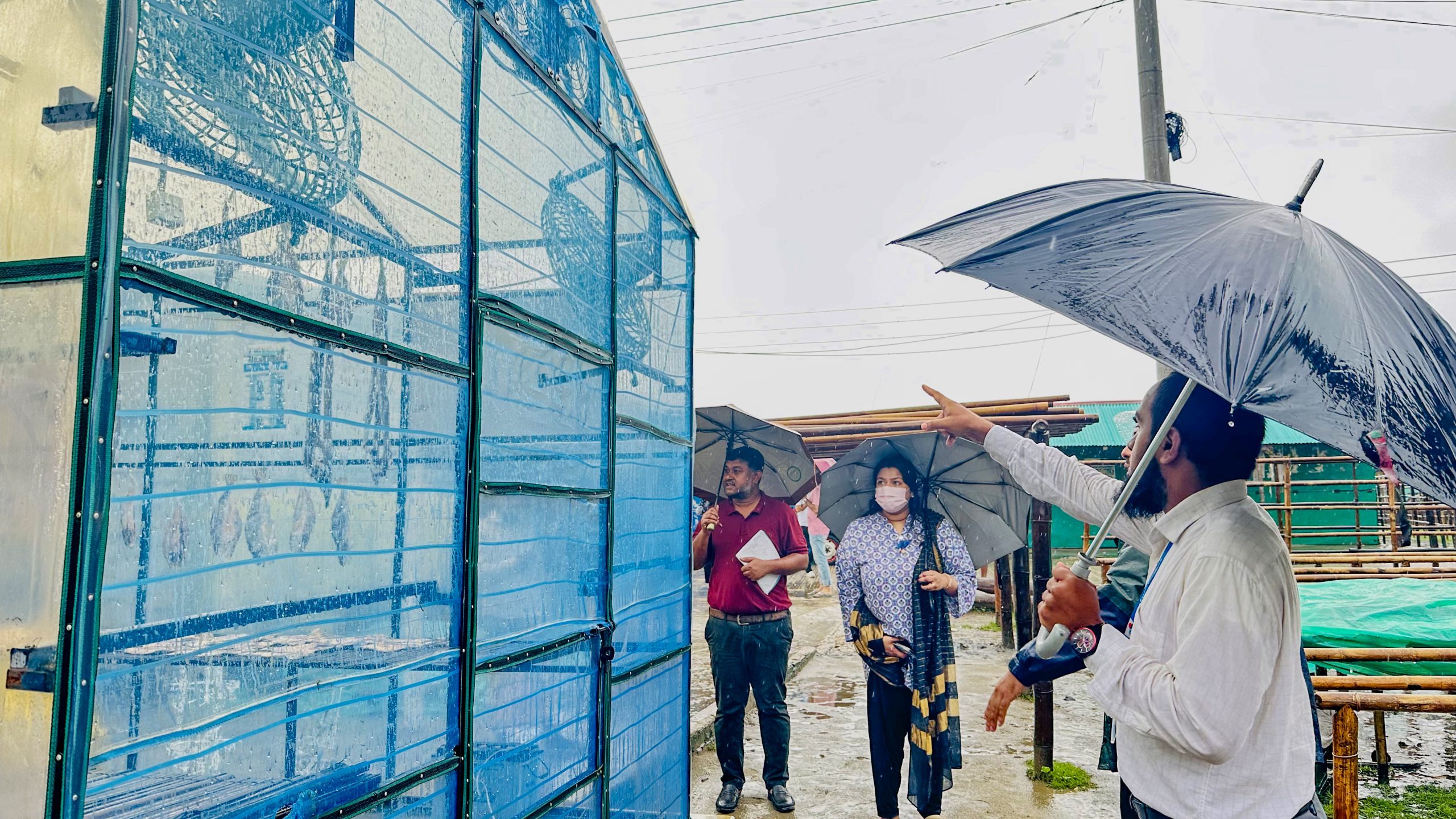
The delegation also visited the Nazirartek dry fish processing area in Cox’s Bazar. The team inspected several key facilities and technologies introduced or supported under the sub-project, including a container-type cold storage facility, dry fish waste collection and processing center, raw fish washing floor and soak pit, solar fish dryer technology, and a plastic recycling unit.

During the field visit, the delegation interacted with entrepreneurs and workers to understand operational practices, identify potential hazards, and assess the effectiveness of existing risk mitigation measures. Particular attention was given to occupational health and safety, environmental management, resource efficiency, waste management, and the practical application of RECP technologies.

The team then held a community consultation meeting with local entrepreneurs, elected representatives, women workers, and other stakeholders. Participants highlighted several issues requiring further attention, including the renovation of the road in Samitirpara, establishment of a primary healthcare facility for female workers, construction of adequate public toilets for women workers, and greater opportunities for developing the dry fish sector as an export-oriented industry through access to modern markets.

The field visit concluded with an emphasis on strengthening safeguards across the entire dry fish value chain, from fish harvesting and processing to final consumption. The delegation stressed the importance of keeping all SMART-supported activities free from child labor, strengthening occupational health and safety measures, ensuring a safe and appropriate working environment for women, and implementing adequate preventive measures against identified hazards and risks throughout the value chain.