The contribution of construction sector in a country’s economic growth is undeniable. Traditionally the sector is mostly reliant on the use of bricks produced in large brick kilns that consume fertile topsoil and responsible for significant carbon emissions since it burns a lot of fossil fuel including wood and coal. This practice harms agricultural land and public health on a significant scale. The story of Md Asad Hossain Orange, an entrepreneur from Thakurgaon, provides a clear example of how strategic intervention can lead to a more sustainable and profitable business model, proving that economic development and environmental sustainability can be mutually reinforcing.
For years, Orange managed his family’s two traditional brick kilns, which provided a steady income but came at a high environmental cost. His business consumed approximately 900,000 kg of fertile topsoil and emitted 2,885 tons of CO₂ annually from coal burning. The environmental damage was significant, leading to farmer protests and the degradation of farmland. On a business level, the traditional process resulted in a low-quality product, with about 40% of bricks cracking during firing. The government also took initiatives to reduce the use of bricks, considering its negative impact on environment. Thus, he was excluded from government tenders that required eco-friendly materials, limiting his market opportunities. His primary goal was to continue his family’s business profitably while also reducing its environmental harm and becoming eligible for government contracts. He knew the negative impact of the brick kilns but could not help continuing, since he had no other options.
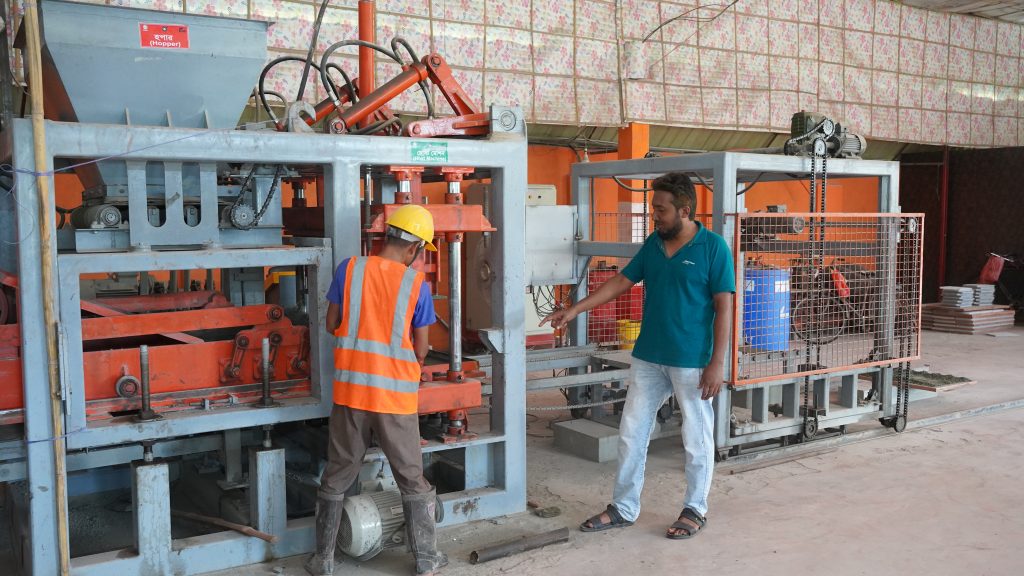
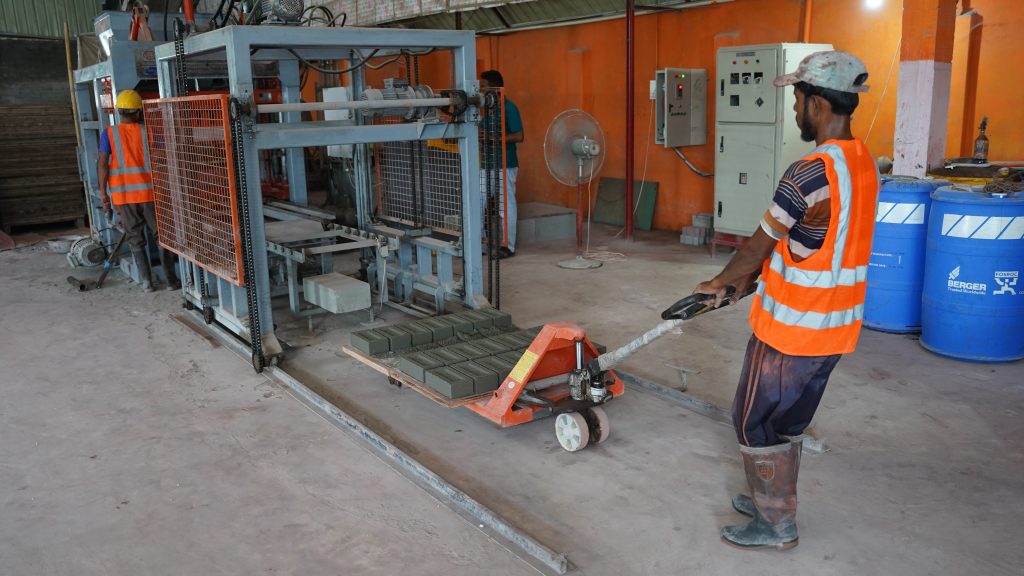
Orange's factory is equiped with state of the art automatic block making machinge
A power factor improvement (PFI) panel is installed to reduce system loss and, thereby, energy cost
In September 2024, the ESDO SMART team visited Orange’s brick kilns and introduced him to the concept of making eco-friendly concrete blocks. This demonstration was a turning point. Realizing the extent of his business’s negative impact on the environment and immense opportunity of concrete blocks, he was motivated to join the project and transform his operations.
Through the SMART project, Orange received comprehensive financial and technical support. He took a loan of BDT 800,000 from the project and was enrolled in residential, hands-on training sessions on resource-efficient block production for himself, his technicians, and masons. The training covered advanced technologies, fire safety, and occupational health standards. He also received guidance on proper production technique, business and product certification to meet market standards.
He started block production and faced some challenges. The machines run on electricity and the raw materials are not so cheap. So, the profit margin was not up to his expectation. The SMART project officials, introduced him with Resource-Efficient and Cleaner Production (RECP) practices.
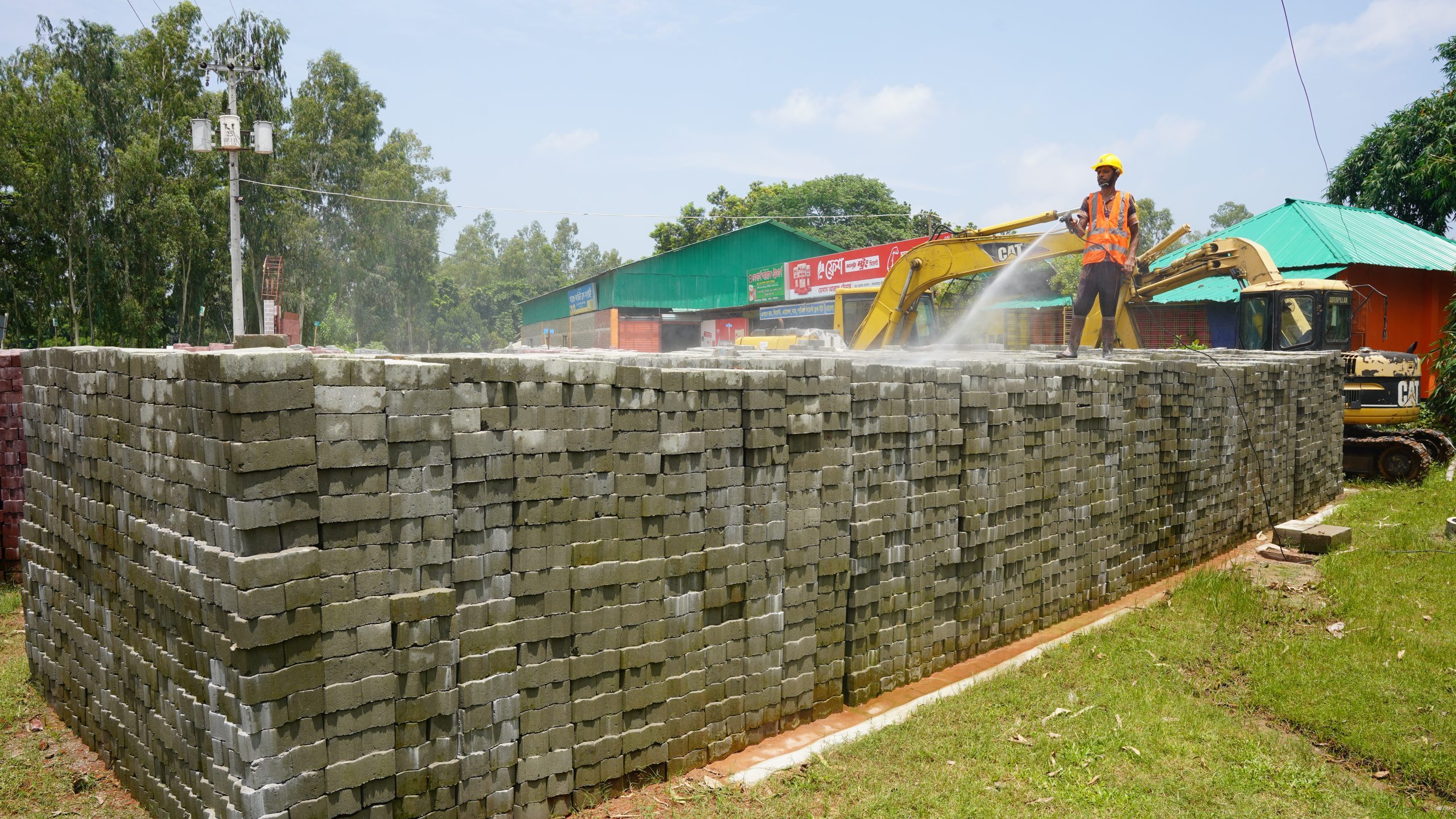
Orange implemented several RECP technologies and practices. He installed a Power Factor Improvement (PFI) system to reduce electricity consumption, built a Dyke Wall storage for raw materials to minimize air emissions, and created a wastewater recharge pit to reuse water instead of discharging it. These changes led to significant results: his electricity bills dropped by 30%, raw material waste was reduced by 15%, and 20,000 liters of water were reused monthly.
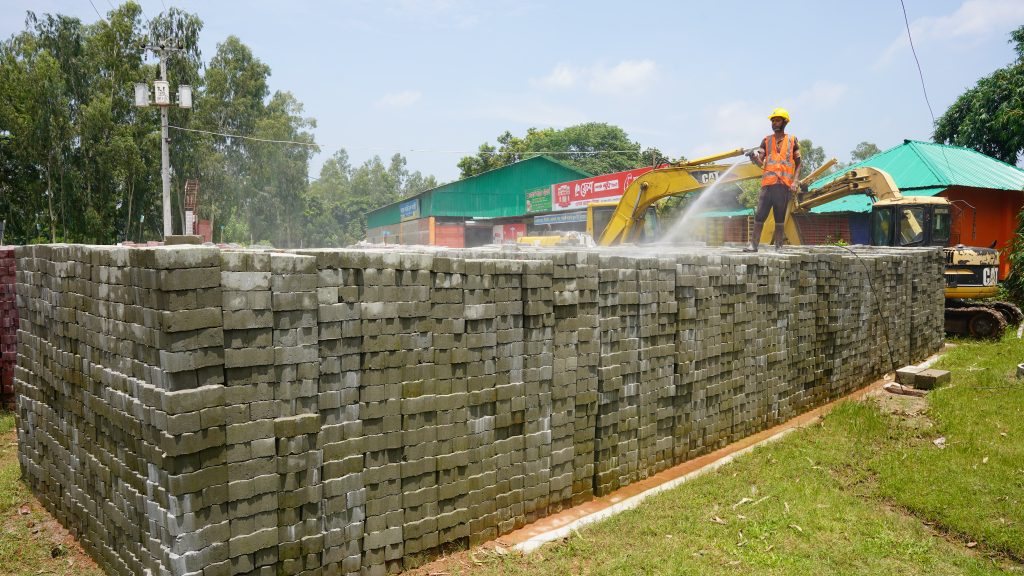
The workers reuse thousands of liters of water for curing the blocks
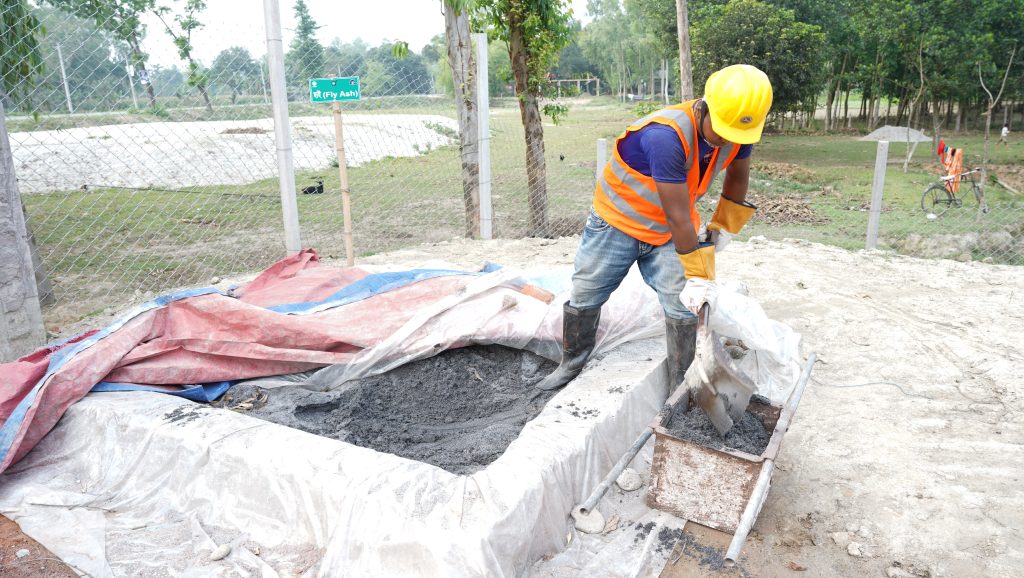
Fly ash from the rice mills is used in block production, an efficient use of waste materials
Most importantly, his transition to concrete blocks now saves over 4,300 tons of topsoil annually compared to traditional brick kilns.
Beyond the numbers, the impact has been personal and communal. Orange no longer feels the guilt of harming the environment. He notes that air quality has improved, and farmland has been restored, allowing his neighbors to resume farming, with one neighbor recently harvesting 40 mounds of rice. His workers now enjoy safer conditions and improved health.
The success of Orange’s business is a direct result of a strategic collaboration. As Engineer Nazmul Haque, Assistant Engineer at the Public Works Department (PWD) in Thakurgaon, notes, the SMART project created a breakthrough by combining World Bank financing with technical support for RECP. “The transition of Orange Concrete Block Factory alone now saves over 4,000 tons of topsoil every year, and this successful model is already being scaled up in several districts under the National Adaptation Plan 2050,” Haque stated.
The Executive Director of ESDO, highlighted the vision behind the project, “For years, Bangladesh’s construction sector relied on traditional brick kilns — consuming fertile topsoil, emitting carbon, and harming communities. This was not sustainable for our farmers, our workers, or our environment. Today, they are not just producing blocks, they are producing hope, resilience, and sustainability.” He stated that the World Bank provided strategic guidance and financing, while PKSF ensured accountability and strong coordination. This synergy allowed ESDO to effectively channel resources to entrepreneurs, empowering them to adopt new technologies and access markets.
Engineer Nazmul Haque, Public Works Department
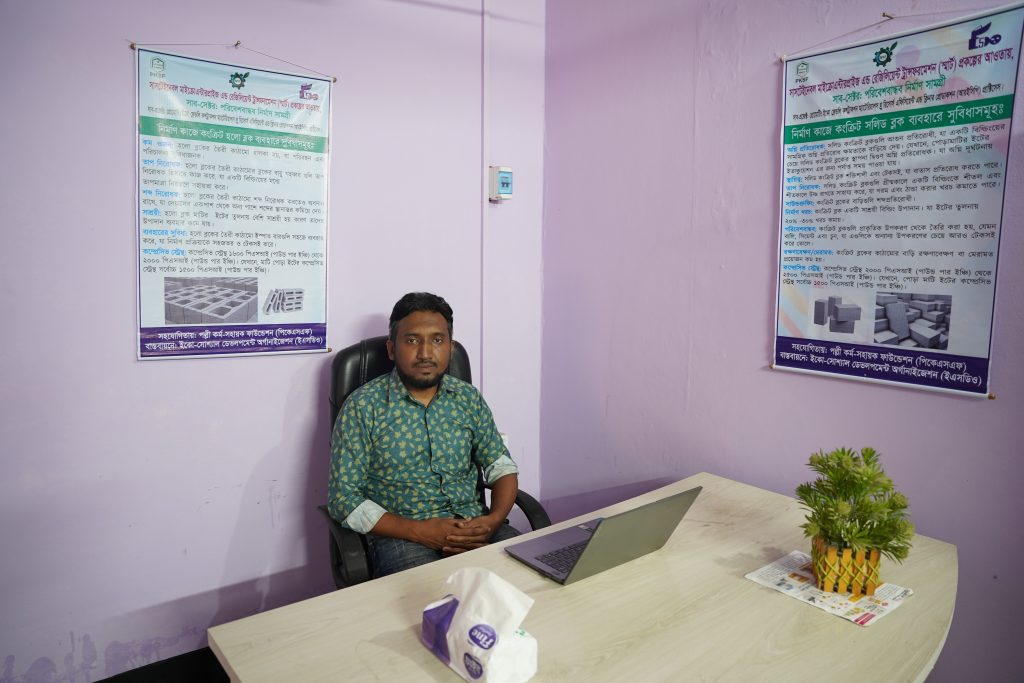
Micro-entrepreneur Md Asad Hossain Orange
The SMART project has shown that addressing a pressing challenge like balancing urbanization with climate resilience is possible through an integrated approach. The project’s success is driven by its combination of training, technology adoption, and market linkages. By providing policy support, financial access, and technical guidance, it has reduced the barriers for entrepreneurs to adopt green business models.
Orange now aims to scale up his eco-friendly block production and expand into wider markets. He plans to continue adopting innovative RECP practices to strengthen the sustainability of his business. The project’s results, visible in Orange’s transformation, suggest that with sustained support, these eco-friendly practices can move from a pilot to the new standard for Bangladesh’s construction sector.
ESDO is working to provide financial and technical support to 1,200 microenterprises in eight districts in the northern region. However, two other Partner Organizations supporting a total of 600 block-producing microenterprises through similar sub-projects of the SMART project in the southern parts of the country. With support from the government of Bangladesh and the World Bank, PKSF is implementing the SMART project across the country to support around 80,000 microenterprises in Agriculture, Manufacturing and Processing, and Service sectors during within 2028. The main objective of the project is to increase resource-efficient and resilient green growth of microenterprises.