
SMART baseline study highlights gaps in RECP technology adoption, workplace safety, and market access among microenterprises
Limited awareness of green technologies, inadequate workplace safety measures, and weak market linkages remain major challenges for microenterprises in Bangladesh, according to the baseline study of the Sustainable Microenterprise and Resilient Transformation (SMART) Project, implemented by the Palli Karma-Sahayak Foundation (PKSF).
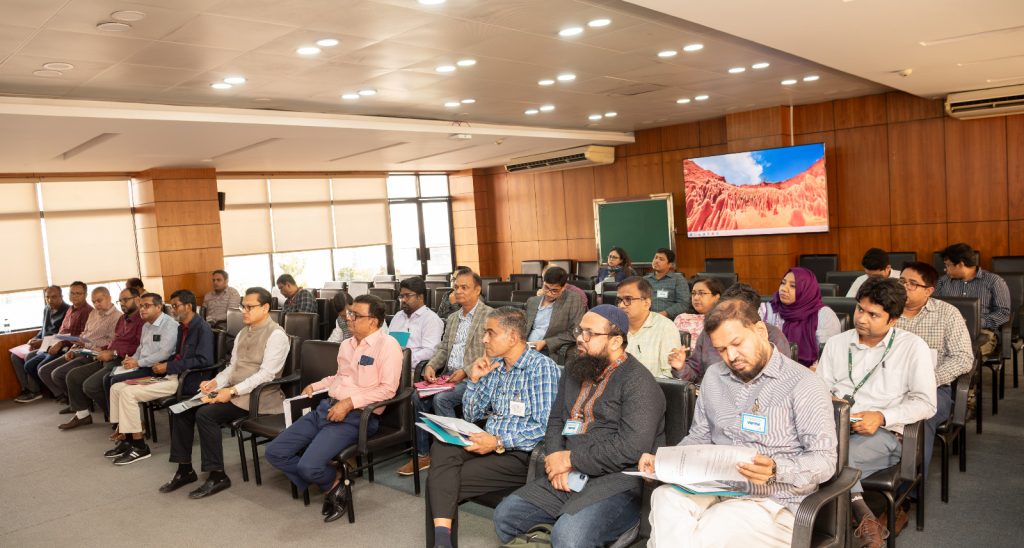
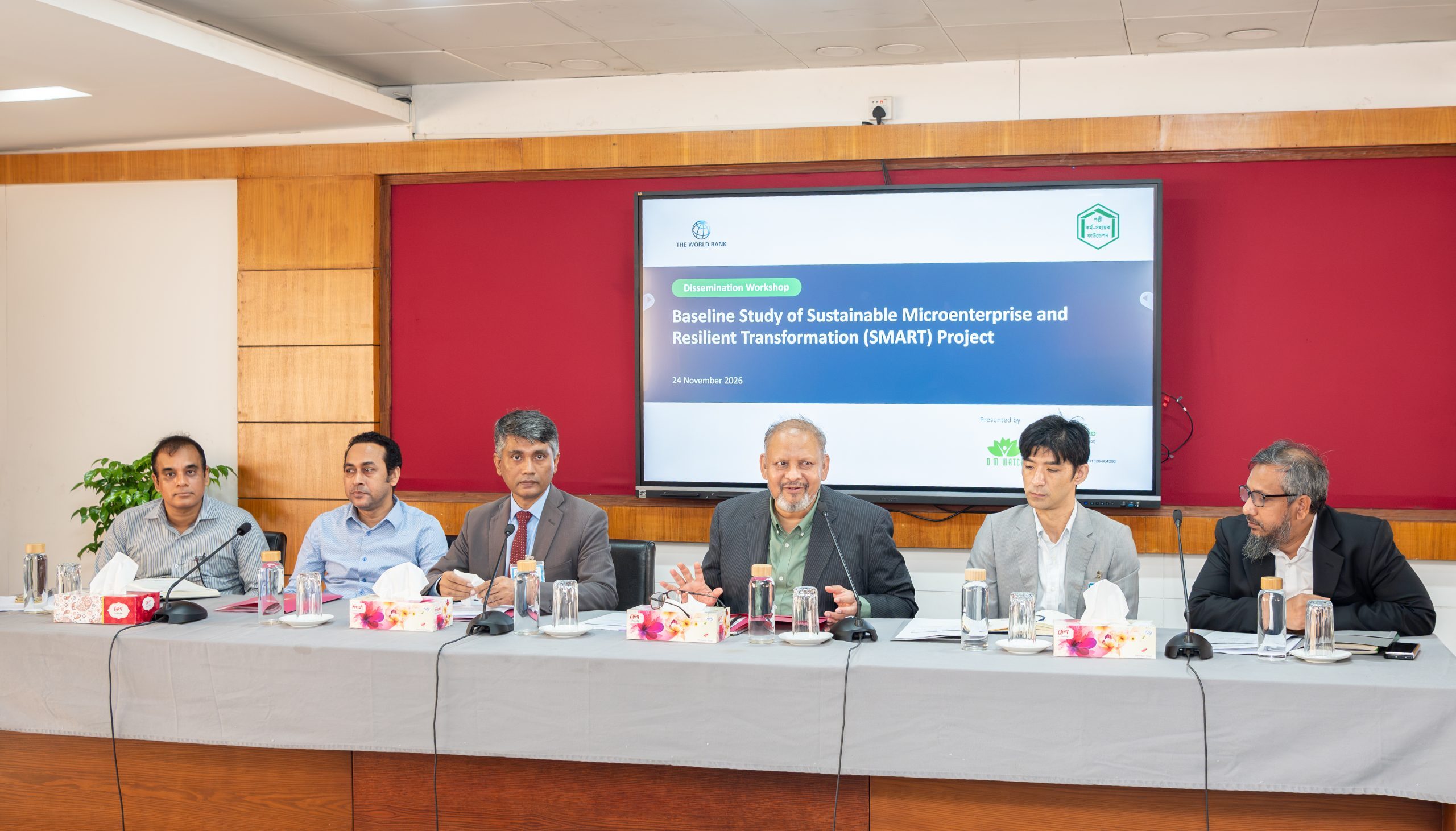
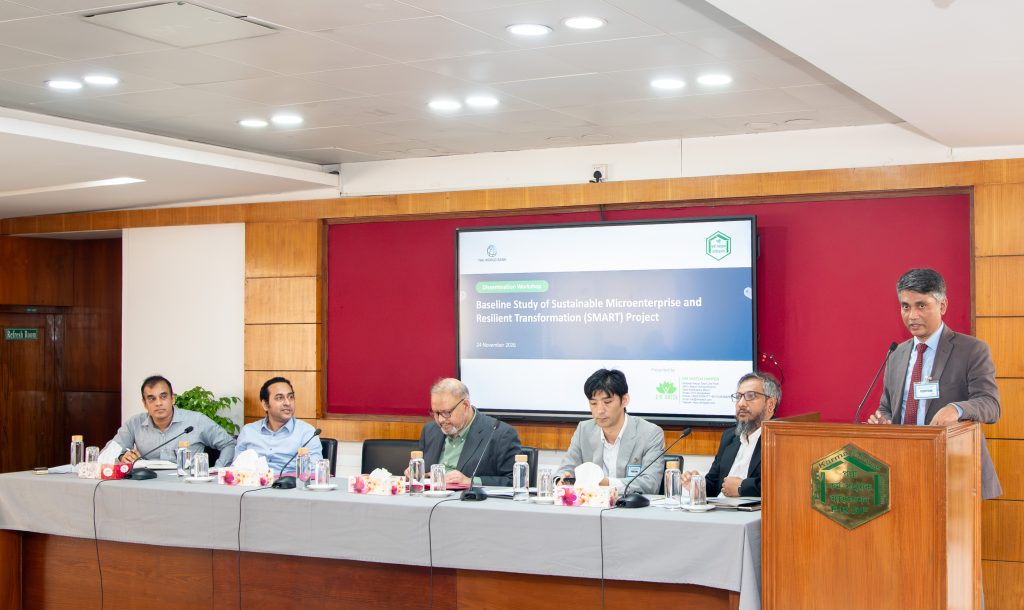
The findings were presented at a dissemination workshop held on 24 November 2026, at PKSF Bhaban-1 in Agargaon, Dhaka. Md Mashiar Rahman, Deputy Managing Director of PKSF, presided over the workshop. Officials from PKSF, representatives of the World Bank and relevant Partner Organizations, and members of the study team attended the event. A. K. M. Zahirul Haque, Project Coordinator of the SMART project, delivered the welcome speech.
In his inaugural remarks, Md Mashiar Rahman said, “The findings of this baseline study provide an important foundation for understanding the challenges and opportunities facing microenterprises. We need to translate this evidence into practical interventions that promote resource efficiency, improve workplace safety, strengthen market access, and build climate-resilient enterprises.”
Keisuke Iyadomi, the SMART project’s Task Team Leader at the World Bank, said, “The study has captured useful and practical findings that will help stimulate the successful implementation of the project at the grassroots level.”
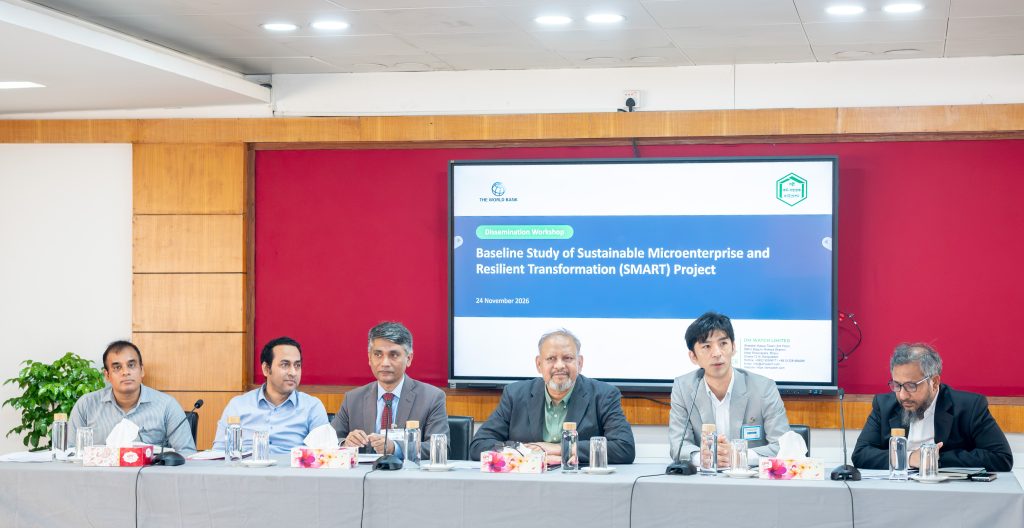
Conducted by DM Watch Ltd., the baseline study covered 11,495 microenterprises across 17 sub-sectors in 34 districts. Dr Mahfuz Kabir, Team Leader of the study team, presented the findings.
One of the key findings was the limited adoption of resource-efficient and cleaner production (RECP) practices. As many as 84 percent of microenterprises in the treatment group had not adopted any of the RECP practices assessed by the study. Awareness of green technologies was also remarkably low, with only 2.1 percent of respondents in the treatment group reporting knowledge of such technologies. Similarly, only 4.2 percent had heard of RECP, while 23.6 percent reported awareness of climate vulnerability.
The study also identified significant shortcomings in occupational health and safety (OHS) conditions. Only 11.2 percent of treatment-group enterprises provided personal protective equipment (PPE) to workers, while 9 percent had first-aid kits and just 2.8 percent reported providing safety training. Firefighting equipment was available in only 1.7 percent of the enterprises. Lack of awareness and knowledge was identified as the leading barrier to implementing workplace safety measures.
The findings further highlighted considerable opportunities to improve the competitiveness and market access of microenterprises. Only 3.2 percent of treatment-group enterprises had product certification, 28.8 percent had trade licenses, and just 1.1 percent reported owning a brand. BSTI compliance was recorded in only 0.4 percent of the treatment group.
Access to common service facilities was another area requiring attention. Only 1.5 percent of treatment-group enterprises reported having access to such facilities. The study’s qualitative findings emphasized the potential of cluster-based common service centers to reduce production costs, improve efficiency, facilitate experience sharing, and ensure continuity of production.
The study also identified substantial gaps in access to modern markets. Only 2.8 percent of respondents in the treatment group were familiar with modern trade, while 7.9 percent of enterprises reported supplying premium market channels. Interest in e-commerce stood at 6.8 percent.
To address these challenges, the study recommended accelerating RECP adoption through sector-specific demonstrations, practical training, and enterprise-level coaching. It also emphasized the need for affordable financing, access to RECP technologies, improved workplace safety and environmental management, product certification, branding, digital marketing, and stronger buyer-seller linkages.
For long-term development, the recommendations included establishing common service facilities within business clusters, supporting climate-resilient enterprise development, strengthening institutional linkages, and developing sub-sector-specific strategies to facilitate the adoption of RECP practices. The study also emphasized the importance of continuous monitoring and learning through subsequent midline and endline assessments.
The baseline study will serve as an important benchmark for assessing the progress of the SMART project and measuring changes in the business, environmental, and institutional conditions of microenterprises over the course of its implementation.
PKSF has been implementing the SMART project since 2023 to help around 80,000 microenterprises promote green growth by adopting climate-resilient RECP practices in their businesses.